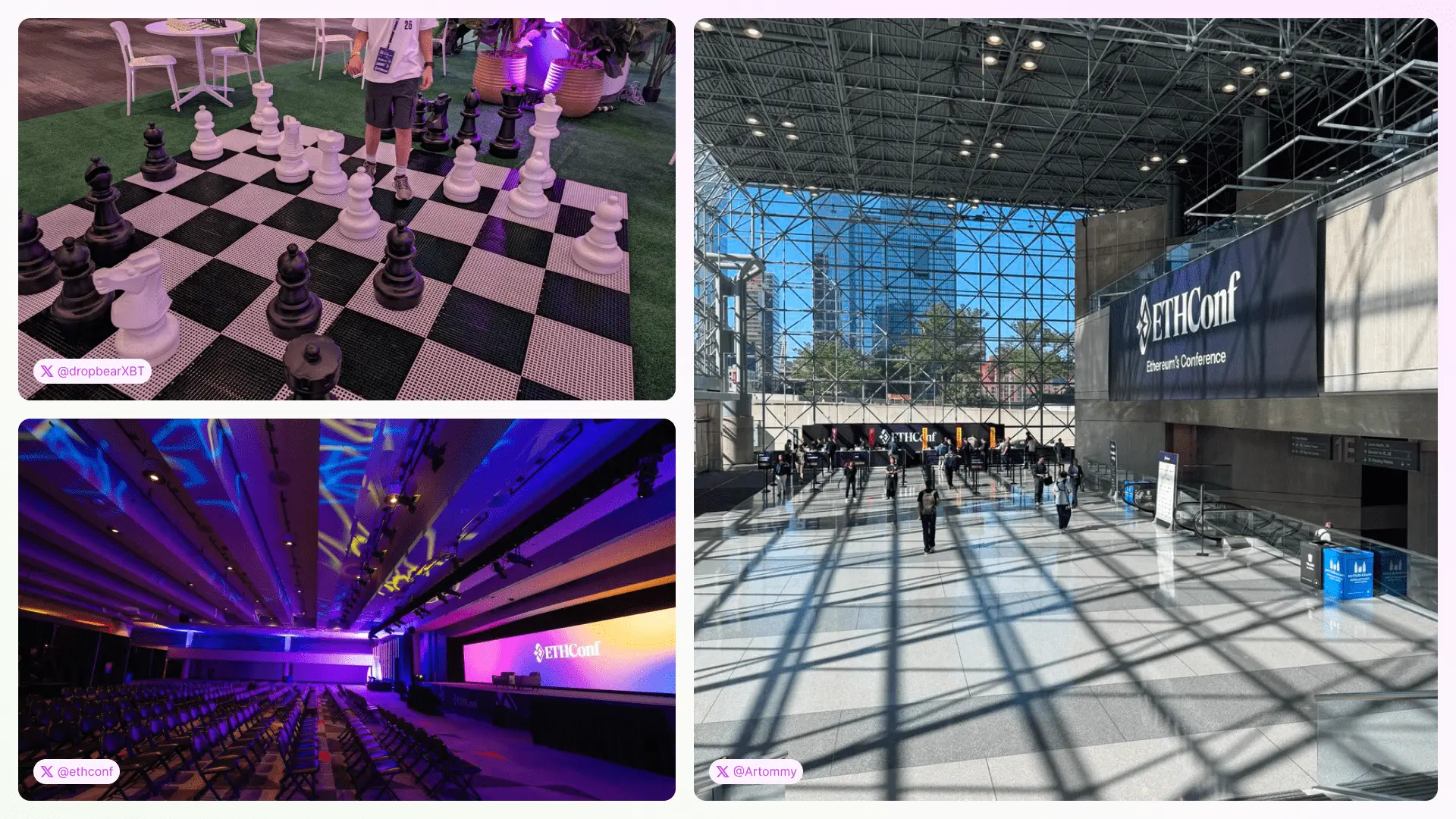
By the time Kartik Talwar delivered the welcome remarks to a seated main-stage audience, the week’s character was already set. ETHConf 2026 was not a developer conference that happened to attract institutional interest. It was a TradFi conversion event held on Ethereum’s home turf – the Javits Center as the venue, 5,000-plus attendees and 150-plus speakers as the scale, and a main stage that opened with Aave and moved through BlackRock, DTCC, the SEC, and SWIFT before the three days were done.
The night before the doors opened, two parallel gatherings were already underway. A Stablecoin Dinner in Manhattan pulled together founders and capital allocators working in payments and stablecoin infrastructure. Across town, Protocol Labs opened its hub at OASIS by Workville, a base for open-source contributors and builders who needed somewhere to work between sessions all week. The two audiences ETHConf was trying to hold simultaneously had already split before the conference began.
No More Blockchain 101
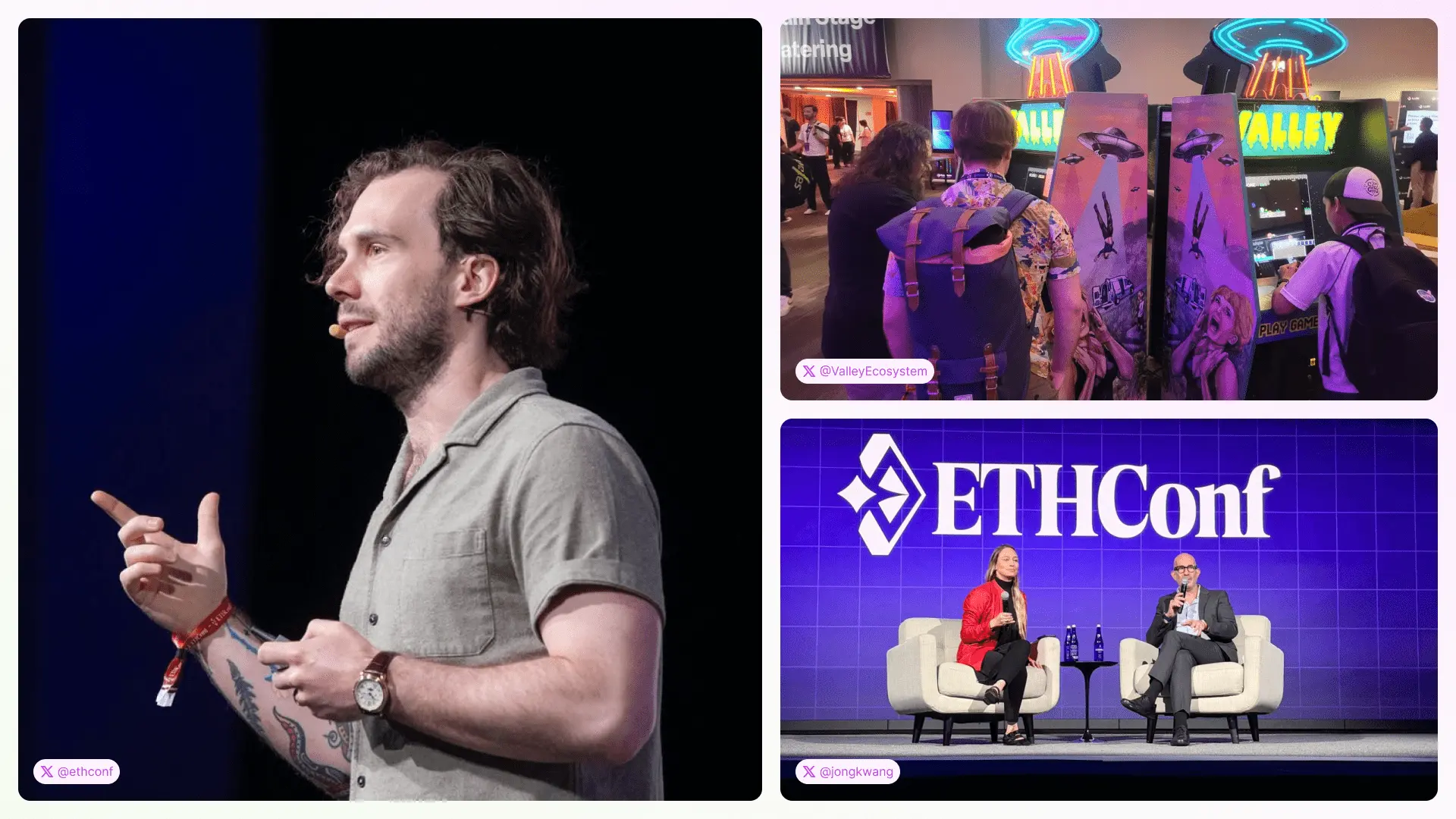
The public program moved fast and stayed institutional. Stani Kulechov opened with a talk on building credit markets at internet speed. SEC representatives joined Plume Network for a panel on tokenized onchain securities. DTCC and the Linux Foundation took on what trust in market infrastructure means once it migrates onchain. BlackRock and SharpLink appeared together on what the largest onchain allocators see coming. Consensys and Linea covered code neutrality and adoption, and Chainlink Labs led off a full breakout day on institutional DeFi. Day two kept the pace: Etherealize’s CEO on Wall Street’s quiet migration onchain, Securitize’s Carlos Domingo in conversation with Camila Russo, Frax’s Sam Kazemian on what changes when a stablecoin becomes core infrastructure, and Privy’s CEO on the stack behind Stripe’s stablecoin payments.
Ethereum conferences have booked TradFi names for years, so the roster was familiar. The conversations were not. These sessions sat well past introductions: the DTCC panel dug into how decades of market-infrastructure trust frameworks map onto onchain systems, the SEC panel dealt in the specifics of tokenized-securities regulation, and the BlackRock conversation assumed allocation, not exploration. On the public stage, at least, the industry had stopped explaining what a blockchain is.
The sharpest note of doubt came from a former SWIFT executive, in a fireside titled simply What Won’t Settle. The question – what these new rails still can’t settle the way the old ones do – landed harder from someone who spent years inside the system crypto wants to replace. It didn’t set the day’s agenda, but it named, plainly and on the main stage, the gap the rest of the program left alone.
Behind Closed Doors
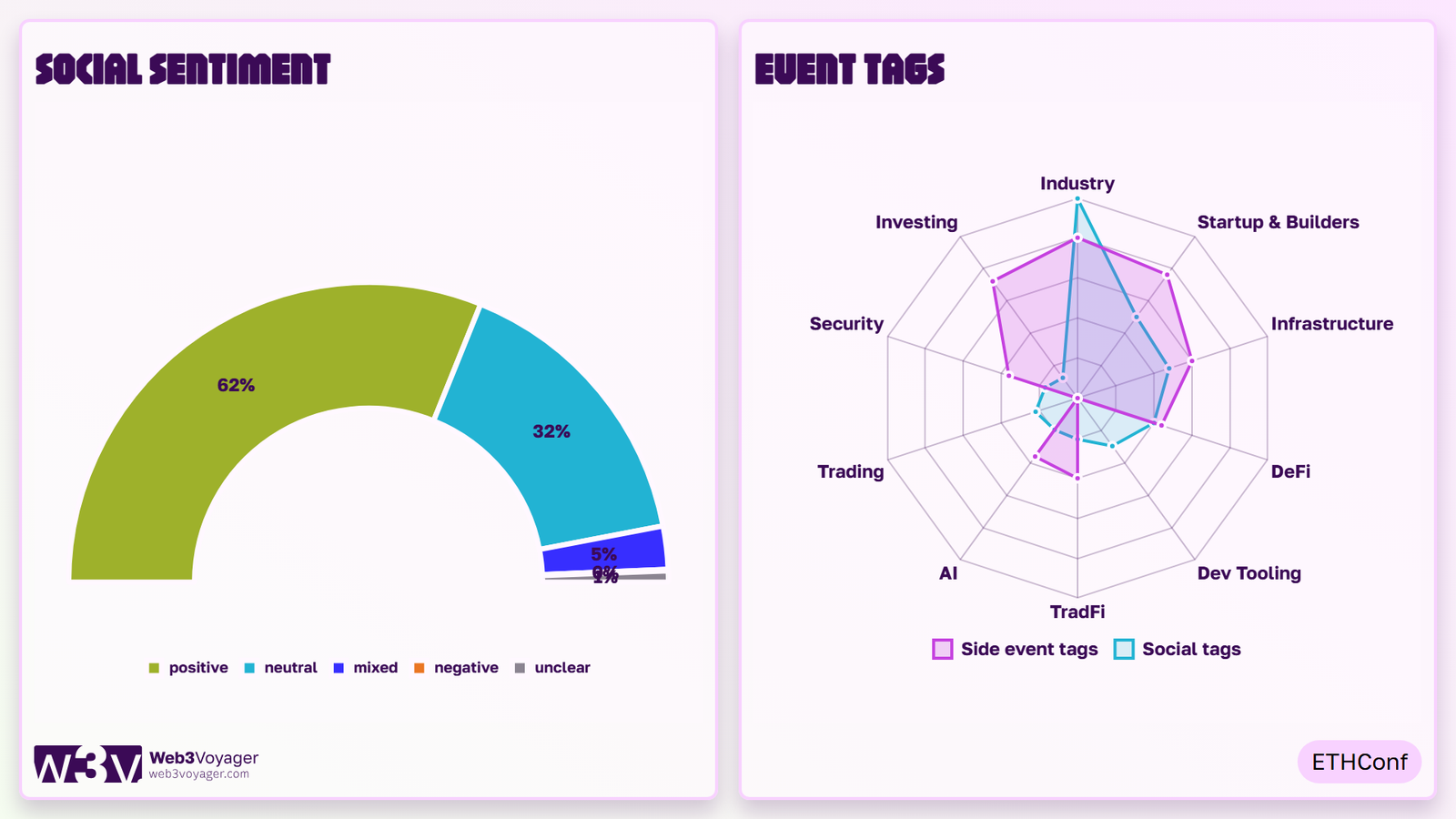
The main stage gave the clean version; the side events complicated it. Of the 60+ gatherings W3V tracked across the week, the two biggest categories were institutional rooms and capital deal flow. Day two alone held a private coffee for Canton Network operators at Greywind, a Cointelegraph salon for up to 55 senior founders and investors, a small Figure happy hour for RWA and DeFi people, a closed investor breakfast on onchain adoption, and a curated dinner for founders building on crypto rails who met to talk privacy, compliance, and adoption off the record.
The most revealing event came the day after the conference ended. Onchain Allocators hosted an invite-only dinner for roughly 20 capital allocators, fund managers, and DeFi-native operators – no panels, no decks, just a long dinner where the real questions got asked. The format was the point: the most substantive institutional conversation of the week was the one that threw out the conference format entirely, and nothing said there reached a social media feed.
AI Lived in the Margins
AI was a real thread all week, just never the main-stage headline. It started the night before the doors opened, with a live demo of an encrypted running app built on fully homomorphic encryption – privacy tech with an AI edge, and a hint of where some builder attention was already pointed. Builder Nights NYC, hosted by MetaMask with Chainlink, Fhenix, and others, built its first night around agentic tech. Day two gave agentic payments for enterprise a main-stage slot, with x402 and Coinbase Developer Platform pitching autonomous payment infrastructure, while a closed OKX and Auros evening focused on AI-powered trading. Gearbox Protocol’s co-founder took a breakout on trusting agents with capital.
The thread carried past the close. The day after, an invite-only session looked at how AI is reshaping attack and defense in onchain finance, with a focus on formal verification for DeFi, stablecoins, and RWAs. The same day, Agentic Commerce Day pulled investors, builders, and infrastructure teams together on how autonomous agents change value settlement – at Solana Skyline. That last bit is worth holding onto: the week’s most prominent AI-commerce event happened on Solana, and its only hackathon happened on Monad. The agentic story isn’t Ethereum’s to claim alone, and the side-event record makes that obvious.
Brooklyn Closed the Week the Way It Always Does
Day three was quieter, and the program leaned into the close. The main stage restated the thesis one more time, in a mid-morning talk titled The Institutional Inflection Point: Banks Are Racing Onchain in 2026. RWA Day NYC held a closing breakfast for the tokenized-finance crowd. AfterConf, put on by a coalition including 1inch, the Blockchain Association, and Alchemy, gathered founders, investors, and policymakers around regulation and policy. An invitation-only dinner for 30 institutional leaders in privacy and security closed the formal program.
Then the week crossed the bridge. ETH Nights took over a Williamsburg rooftop with sunset sets, live music, and an NBA Finals watch party, while ENS, IRL, and Refraction kept Public Records going late behind a DJ set from livwutang. The official program belonged to the institutions; the last night belonged to the community.
What We’re Taking Away
The main ETHConf 2026 takeaway is that the introductory era is over. For years these conferences booked TradFi names and spent the sessions explaining what a blockchain is. This time the SEC panel argued the specifics of tokenized-securities regulation, DTCC mapped decades of trust frameworks onto onchain settlement, and BlackRock spoke as an allocator, not a tourist. The pitch phase is done. The people with capital are convinced blockchain is real; what they need now are rails they can move size onto.
And that’s the bar. The institutions are permanent; no cycle washes them out. What’s unsettled is whether the technology earns the weight they’re prepared to put on it. ETHConf 2026 closed the question of whether the institutions are coming, but opened a harder one about whether the rails can hold them.