The ROI of a Web3 conference is notoriously hard to calculate. Flights, hotel, ticket, side event cover charges, two to four days out of office, if you have one. You get back to your desk with a Telegram full of people you half-remember and a LinkedIn request from someone whose project you still can’t describe. The connections that mattered? Usually three, maybe five. Sometimes less.
Showing up without a system will do that. And Web3 events networking without a system is just expensive socialising.
We spoke to two people who have figured out what separates a productive conference week from an expensive one. Owen Healy is the founder of Owen Healy Blockchain Talent, one of the most recognized recruiting agencies in Web3, with placements across more than 30 countries and a front-row seat at virtually every major conference in the ecosystem. Dayana Aleksandrova is the Social + New Media Lead at WalletConnect, a regular speaker, and someone who has worked the conference circuit long enough to know exactly which rooms are worth her time and which aren’t. What follows is a practical framework built from their experience – before, during, and after the event.
The Work Starts a Month Out
Most people treat conference prep as booking flights and scanning the agenda. The people who consistently leave with real outcomes start earlier – and they start with content. The logic is simple: a conference is two or three days, and you’re competing for the attention of people who are meeting dozens of others in the same window. If someone has already seen your face and knows what you’re looking for before they run into you on the floor, the conversation starts somewhere completely different.
Dayana’s framework is built around three posts. If you’re a speaker, the announcement is the starting point, not the finish line.
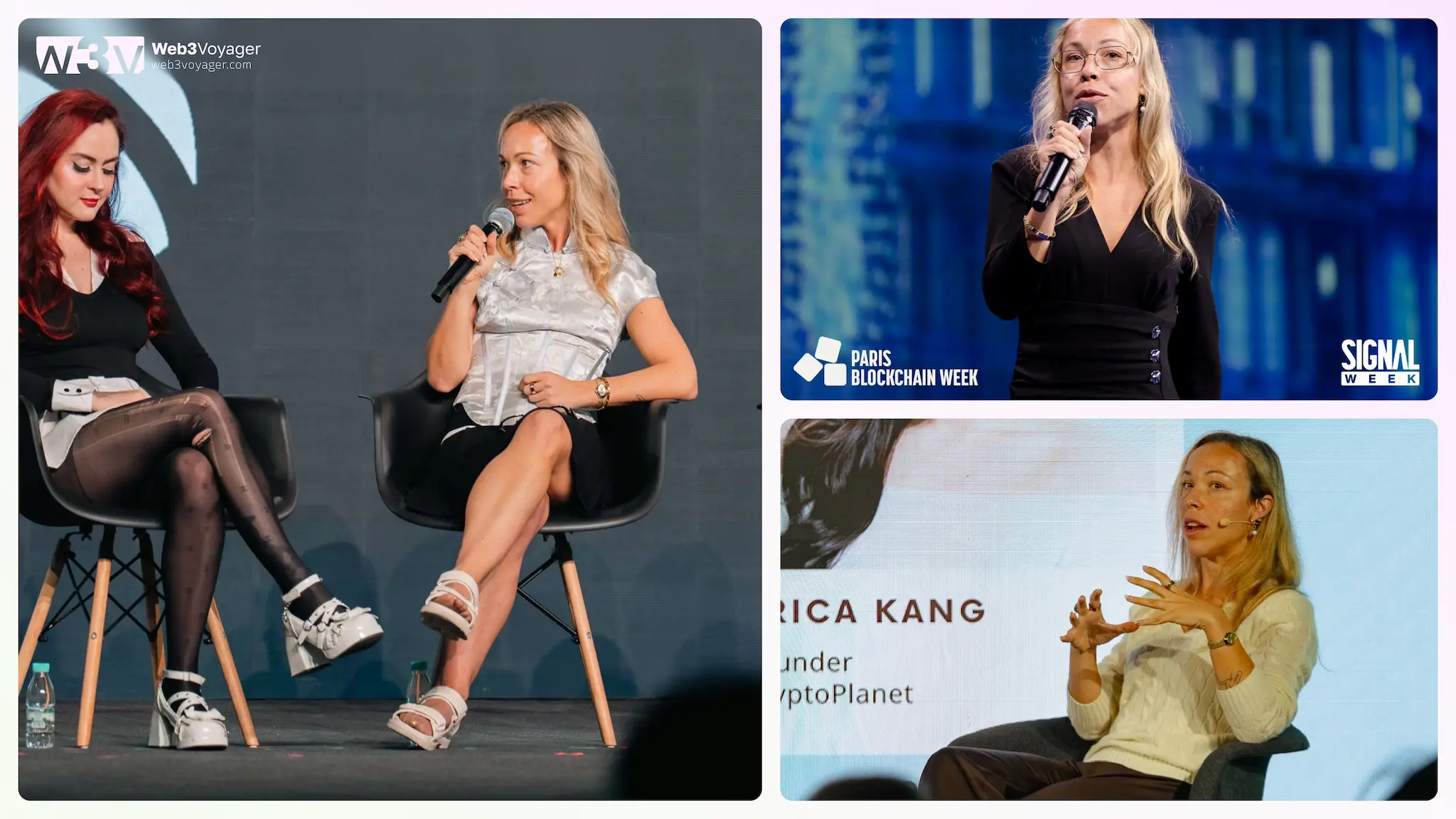
“You should start marketing your attendance and your speaker position two weeks before. You’ll receive a speaker card from the event, or if not, at least your face will be on the website. Take a screenshot and post it on X and LinkedIn. I always post on both, because anytime you attend an event as a speaker, it gives you the status of being someone that has something important to say.”
Dayana Aleksandrova – Speaker Highlights
Not a speaker? The same logic applies. Events like Paris Blockchain Week give attendees an “I’m attending” creative – use it, post it once on X, pin it, post it on LinkedIn. Then the second post: who you’re looking to meet and what you can offer them. The third – the one most people skip – is something personal, a story or experience that gives people a reason to be curious about you before you’ve even landed.
Owen pushes the timeline even further, focusing less on visibility and more on getting the right introductions lined up before the floor gets chaotic.
“Start a month out. Share on social media that you’re going and explain why – what are you trying to achieve? Are you pitching a project? Looking to connect with specific founders? Be specific about that. Then leverage your network. Find people who might introduce you to the right folks before you even arrive. Clean up your intro – your X, GitHub, whatever shows your work. People in this space usually want to help, but you need to show genuine effort first.”
Most attendees don’t message speakers or founders in advance. The ones who do are already memorable by the time they show up.
“Look at the speaker list, check who’s going on, and just message people. Say: ‘Hey, I’m looking to build, or learn, or pitch. Here are my skills. Can we chat?’ Share articles you’ve written, GitHub links – anything that shows you’re serious. People respond to that.”
Your Intro Is a Product
A conference floor is one of the most cognitively demanding environments you can put yourself in. Everyone is slightly overstimulated – managing conversations, checking their phone, tracking who they still need to find before the day ends. When someone meets you, they’re running a very fast calculation: is there a reason to keep this conversation going, or should I move on? Your intro is the input to that calculation.
Owen sees this play out constantly in hiring contexts, and the pattern holds in any networking situation:
“It’s all about the clarity of the intro. The clearer you are, the better. When I meet someone, I need to quickly understand what they’re after and whether there’s a natural crossing point between us. Are they looking to hire? Build? Get into Web3? Once I know that, I can actually help them. If someone’s vague, can’t articulate their why, then there’s not much I can do with that conversation.”
The other failure mode is the opposite of vagueness – pitching too hard, too fast. This one is especially common among business development people who treat every new contact as a sales opportunity, but it shows up everywhere.
“People pitching hard right to your face – especially BDs who just want to sell something immediately or assume you know their tech inside out. And even if you’re technical, you still don’t know their specific stack. That’s a quick kill for me. What gets my attention is honesty. Be transparent about where you’re at and what you’re trying to do. Don’t oversell. Just show effort. You meet someone in person and you’re instantly impressed, even if their resume doesn’t scream perfect fit.’”
That last point is worth sitting with. In-person events compress trust-building in a way that online channels can’t replicate. Someone who wouldn’t get a callback from a cold DM can have a real conversation with a founder or a CTO on a conference floor – if they show up honestly and let the conversation develop. Forcing the pitch collapses that window before it opens.
Owen Healy – Web3 Community & Networking
How to Qualify Fast – and Walk Away Clean
Finding people at conferences is easy. Identifying the wrong ones fast enough to do something about it is where most people lose time. A two-day event with back-to-back conversations sounds productive. It often isn’t, because time spent in the wrong room or the wrong conversation is time that wasn’t spent in the right one.
The confidence to disengage is something a lot of people struggle with. There’s a social pressure that kicks in – it feels rude to cut a conversation short, especially when the other person is enthusiastic. What Dayana describes is a reframe that removes the guilt: if you’ve been clear in advance about what you’re looking for, disengaging from a mismatch is honest, not unkind.
“With the content I posted before the event, I’ve already said what I’m looking for. Let’s take the VC example – I’m looking for people building protocols for AI agents or payments for AI agents. So I’m at an event and someone says: ‘I’m building a decentralized social media platform.’ I’ll say that sounds super interesting and I hope it goes super well – but this is a short event, two or three days max, and I really need to meet people building specifically for AI agent payments.”
The key is specificity. A vague exit feels dismissive. A specific one – here’s exactly what I need to find today – gives the other person context and actually respects their time too. Founders and builders at conferences get turned down constantly. They don’t take it personally when the reason is clear.
“If you say that empathetically, people won’t mind. They won’t think you’re rude or mean. They understand – they pitch a lot too, and they won’t take it personally if one person walks away. I would walk in knowing exactly what kind of person I want to meet. And then everyone else, I will very politely say: that sounds awesome, I wish you all the best, I’d love to talk more at a later point – but right now I really have to find people who are doing X, Y, Z. And just smile and walk away.”
The same clarity that makes it easier to walk away from the wrong conversations also makes it easier for the right people to find you. The people worth meeting are usually running the same filter. Show them something clear and specific, and they’ll recognize the match faster.
The Follow-Up Window
The half-life of a conference connection is very short. By the time both people are back at their desks – different cities, different time zones, other priorities stacking up – the energy of that conversation has already started to fade. Most people wait too long to follow up, or send something so generic it does nothing to revive the context. The window is real, and it closes quickly.
Dayana draws a distinction that most follow-up advice misses: being remembered and being thought about are different outcomes, and only one of them produces anything.
“What makes me remember people is two things. One, they can bring something to me right away – like: ‘Hey, you’re at WalletConnect, you mentioned you’re looking for a video editor, let me connect you to my friend.’ Someone who can bring me some kind of connection right away. And two, I’ve had people say at the event itself: ‘I’d love to work with you, can we book a Calendly call?’ If I’m interested, I’ll say yes right there. Send me the Calendly.”
The immediate value piece is harder than it sounds because it requires you to have been paying attention during the conversation – to have listened for what the other person is working on or looking for, not just waited for your turn to talk. A referral, an introduction, a specific piece of information that’s relevant to them: these things land because they demonstrate you were present, not just there.
The longer game is simpler: stay visible. A well-timed message fades. A consistent presence on social media doesn’t.
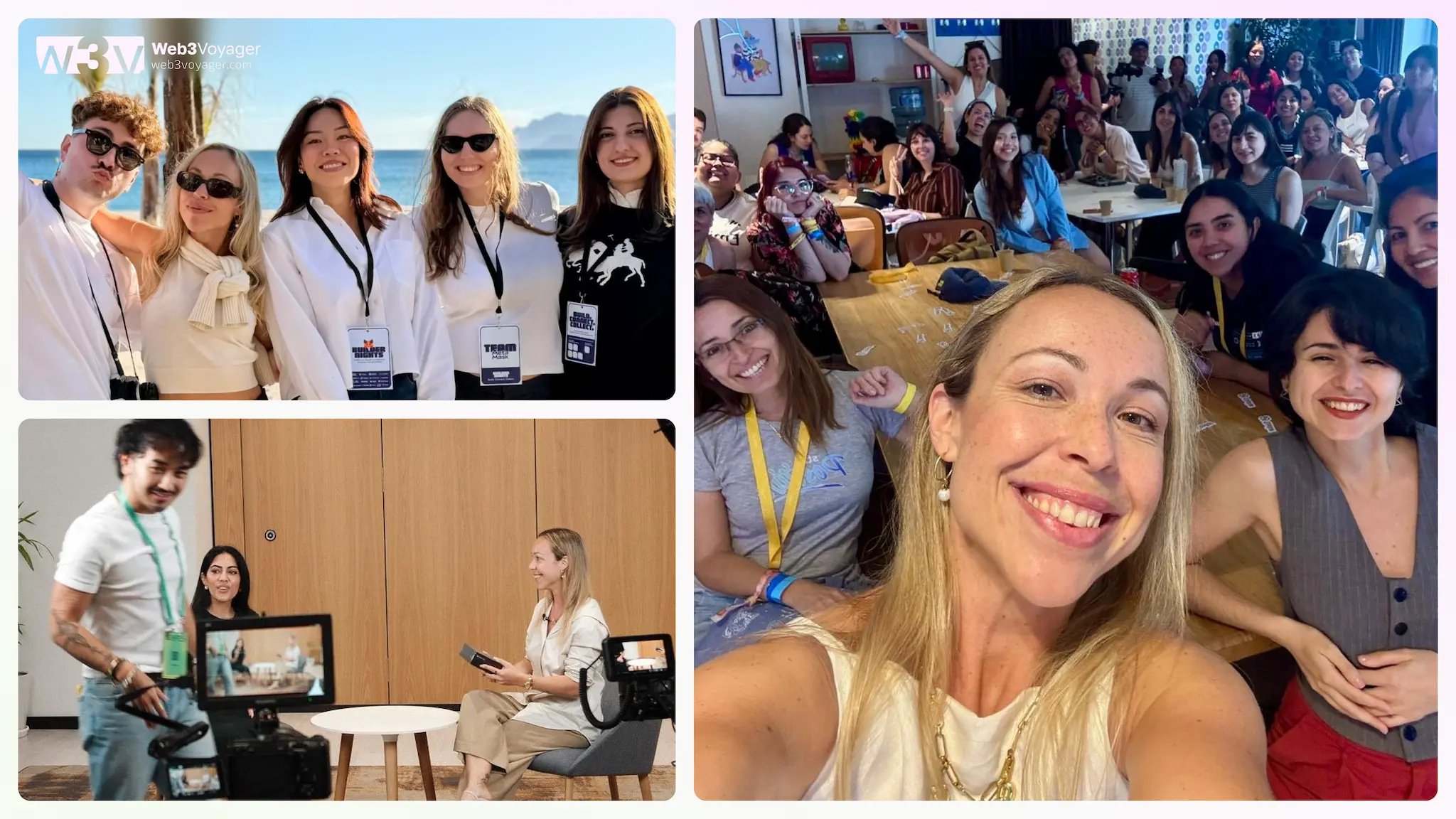
“The people that always stay on my radar are the people that post consistently. The best way to be on my radar is to follow me on X, give me a reason to follow you back – maybe we have something in common, maybe you give me a connection, or maybe we take a really good picture together and you post and say nice things. Then I keep seeing your posts over and over again. That’s what really keeps you top of mind.”
Owen’s version of this is less about social media and more about the mechanics of the message itself. The bar is low, and most people still don’t clear it.
“Don’t just send ‘hello.’ When you reach out, remind me where we met, maybe send a photo from the event, ask a few thoughtful questions. That shows you were present and paying attention. It’s the small things that separate the serious ones from the noise.”
Dayana Aleksandrova – Community & Behind the Scenes
Side Events and After-Parties: The Unwritten Rules
The side event landscape has shifted. For a while, the conventional wisdom was that the main conference floor was mostly theater and the real conversations happened at dinners and rooftop parties. Owen pushes back on that framing – at least in its current form.
“Side events were the game a couple years back, but honestly? We’re seeing the momentum flip. The main conference floor is where the real action is now. After-parties are still valuable for deeper conversations once you’ve already met someone, but they’re not the primary hunting ground anymore.”
This is worth keeping in mind when planning your week. If you’re spending your best energy at side events and showing up to the main floor depleted, you’ve got the priority backwards. Side events work best as a second layer – places to deepen conversations you’ve already started, not kick them off from scratch.
That said, the environment at side events offers something the main floor doesn’t: people drop the professional armor. At a conference, even the most casual builder is somewhat in work mode – aware of who’s watching, who they’re with, what they’re there to accomplish. Side events dissolve that. The format is different, the pressure is lower, and conversations tend to start more organically as a result. Dayana is clear about why.
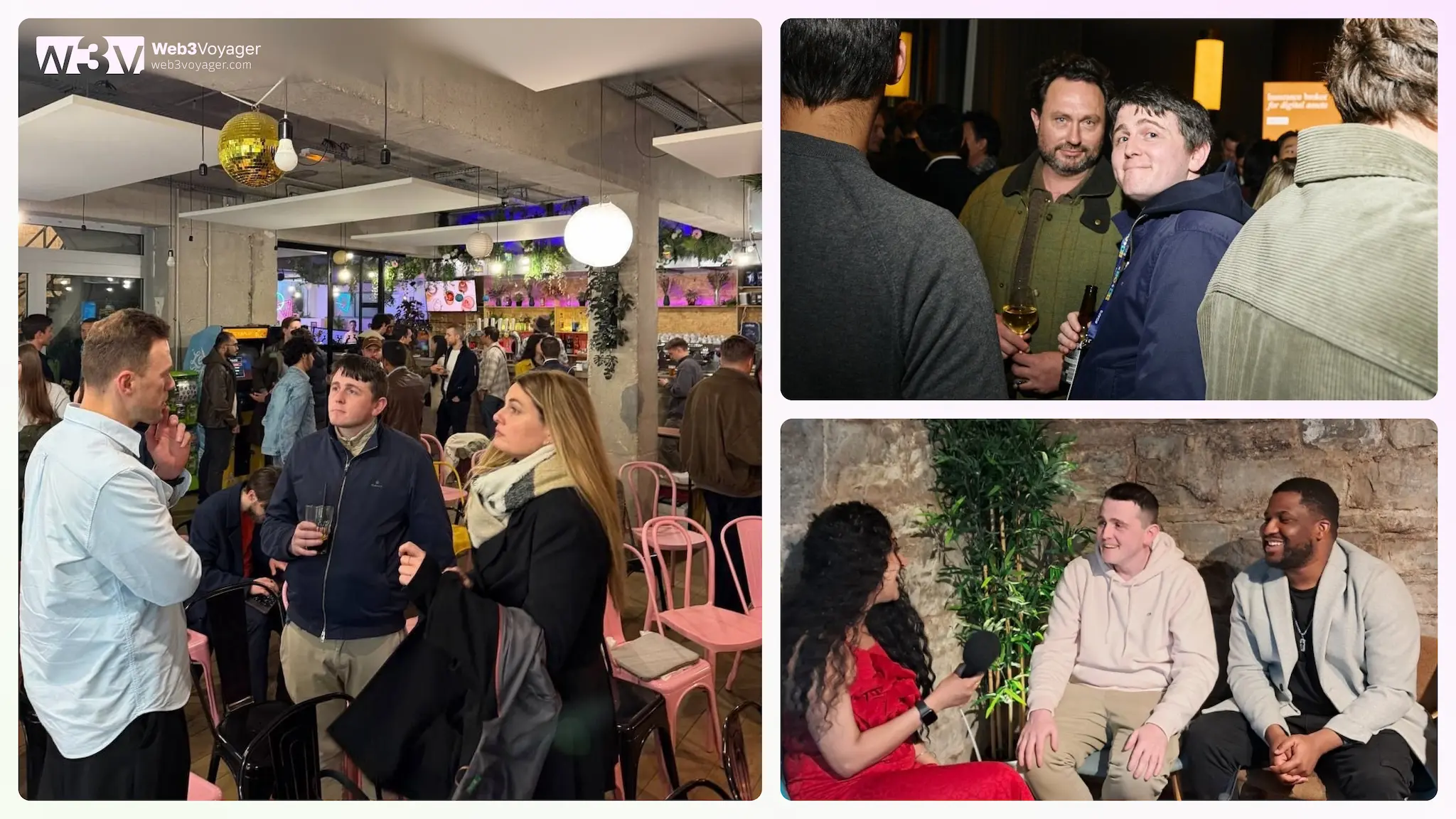
“Side events and parties are a lot different from the main conference, mostly because people are relaxed. At the main conference, people still have their business personality on – they’re in work mode, maybe there with their team or their boss, there’s a bit of pressure. At side events it’s like: you can relax now, loosen your tie – not that people wear ties, but you know what I mean. Especially the ones with cocktails: you go to the bar, you’re waiting for your drink, you meet someone who’s also waiting. Everything’s a lot more organic.”
The mistake people make is carrying the main floor energy into that setting. A polished pitch that works in a conference hall sounds robotic at a cocktail bar. The environment is telling you something – listen to it.
“At the main event, people feel like: this conference cost me hundreds or thousands of dollars, I have to give my best pitch. And then they start sounding extremely robotic. Whereas at the bar, it’s: hey, what’s up? Oh my god, getting this Aperol spritz is taking 20 minutes, what the hell’s going on back there? By the way, I’m Dayana. And then the conversation just starts. Keep it organic, keep it casual — I’m always on the side of casual over formal.”
Dayana also draws a clear line around timing – one that people chasing the late-night parties tend to ignore until it’s too late.
“There’s a sweet spot – something that starts around 7 PM and goes until about 10 or 11. People who go to the very late drinking-based ones often have a hard time remembering who they spoke with, even if the pitch was good. By the next morning, either they don’t remember or the other person doesn’t. And make sure to sign up early — especially with events like EthCC, budgets are getting tighter and headcounts are stricter. There will be less room. Sign up in time.”
Once You’re Back
None of this requires being a Web3 events networking expert or a natural extrovert. The framework is consistent across both of these conversations: do more work before you arrive, be specific about what you’re looking for, make it easy for the right people to recognize you, and follow through quickly when you connect with someone worth staying in touch with.
The ROI question still won’t have a clean answer when you get home. But the ratio of meaningful connections to wasted hallway time tends to shift significantly when you treat the event as a campaign rather than a calendar appointment.
Web3 conferences, side events, and hackathons running across every region and ecosystem are tracked on Web3Voyager. If you’re scoping your next event, the calendar is a starting point.
Make your event stand out
Get our media kit and position your event in front of thousands of visitors. Free services available!
Want more visibility for your conference, hackathon, side event, or meetup?
Drop your email and we’ll send you our media kit with options to personalize, boost and promote your event across our platform and community channels.
🍪 We use cookies to make your Web3 journey smoother.
They help us remember your preferences, show you relevant events, and understand what our community loves most. All without tracking your private data. By accepting, you’re helping us build a better, faster, and more personalized Web3Voyager experience.